Telford College has launched a new robotics club which is sparking innovation, confidence and collaboration among engineering students.
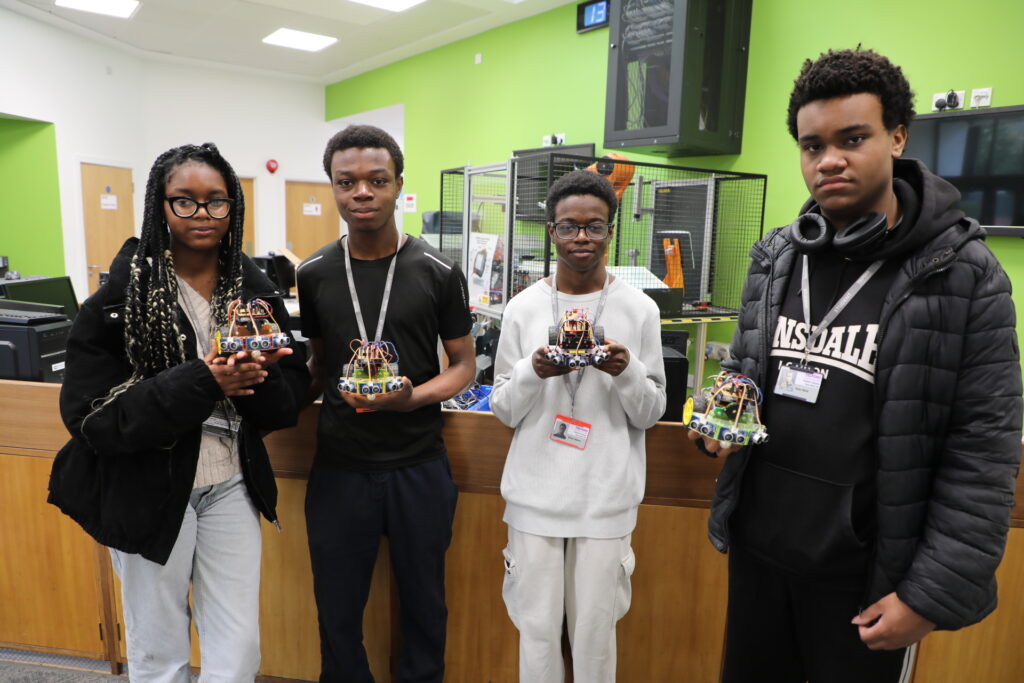
Lecturer Richard Molli‑Boulock has paired up established level three engineering learners with newcomers to the course to boost their skills, stretch ambitions and help more students progress onto higher‑level technical courses.
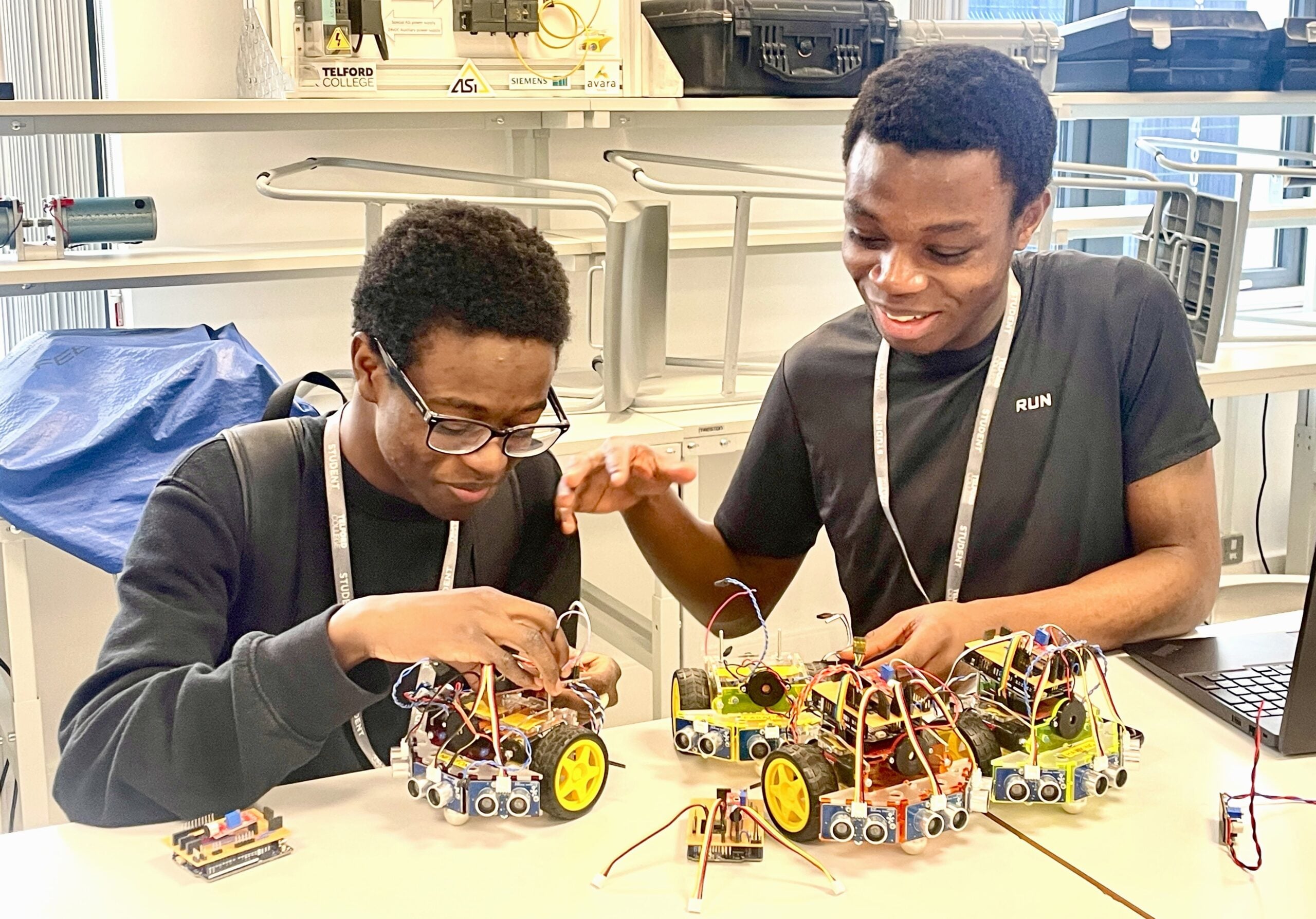
The teams have already designed and built the outer bodies of their robots, followed by two weeks of hands‑on coding – a process full of trial and error, problem‑solving and plenty of breakthroughs.
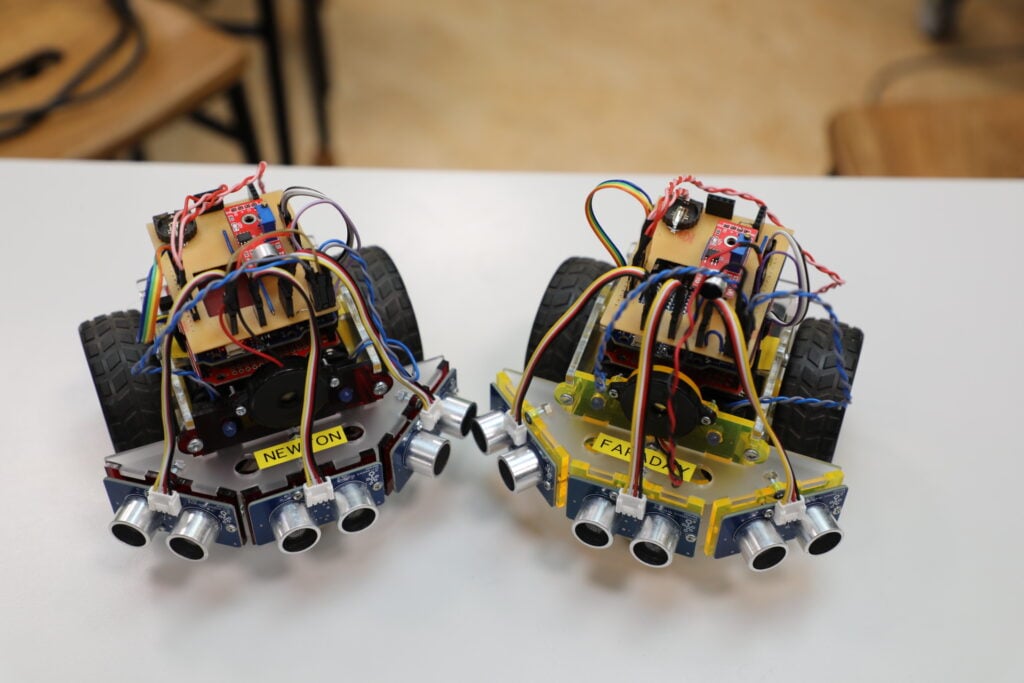
The robots now power up, move independently, and use sensors to detect obstacles, reverse, and change direction.
Three of them have been christened Newton, Faraday and Hawking, in honour of the scientific greats who have inspired them.
Students will soon be adding artificial intelligence which will give their robots the power to recognise particular faces, features or colours.
The club members then plan to stage their own Robot Wars-style challenge at the end of the current academic year, as well as taking their creations around other parts of the college to demonstrate their work.
Nana Djan, a former Hadley Learning Community student who is on a T-Level engineering course, said: “It’s been a lot of fun, getting to grips with the coding side, and then actually building the robot.”
And Omar Adam, an entry-level engineering student who came to the college from Charlton School, added: “I’ve really enjoyed building my robot; it’s been a great test of problem-solving skills. We’re all really looking forward to our Robot Wars.”
Richard said: “The club has been a great success. It has been fantastic to see students working so well together, and coming into college in their own time.
“It has given our students a safe space to experiment, problem‑solve and discover what they’re truly capable of.
“By pairing different levels of learners together, we’re seeing confidence grow, skills accelerate and ambitions rise far beyond the classroom.
“Hands‑on robotics brings engineering to life. It turns theory into movement, code into behaviour, and students into genuine innovators.”
The students have learned to build hardware, write software, and understand how the two interact – using the same Arduino‑C style programming language found in real‑world microcontrollers, processors and CPUs.