Telford College is among the first in the country to place T-Level students into a hospital’s clinical engineering department.
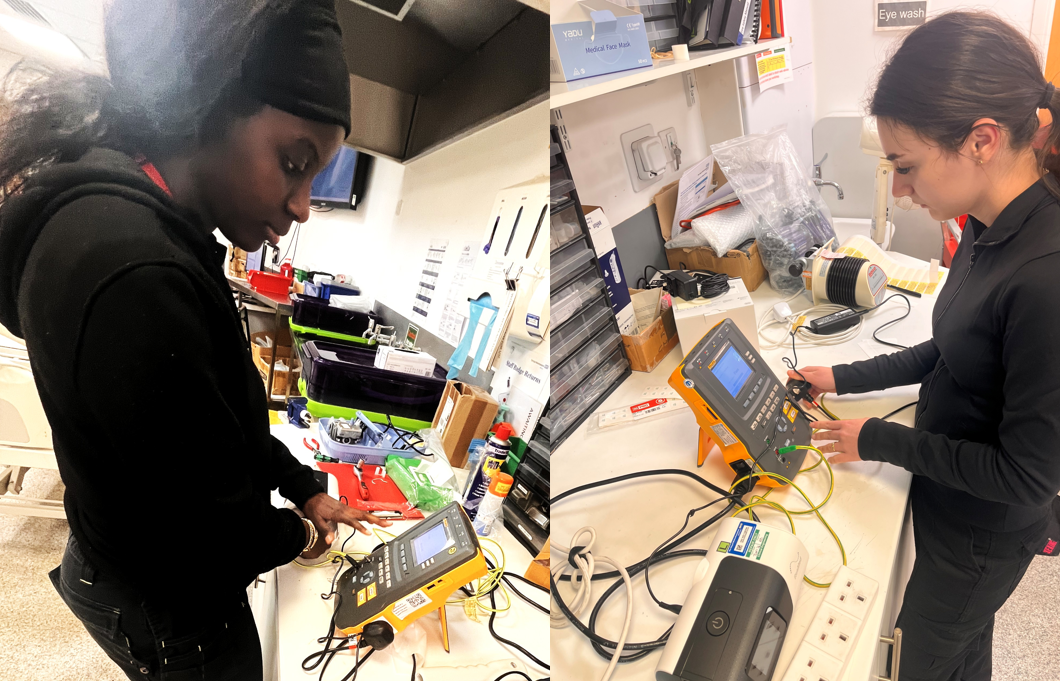
Edelquinn Muthoni and Rebeca Draniceanu are currently combining their studies with a placement at the Royal Wolverhampton NHS Trust, where staff describe them as a ‘real asset’ to the team.
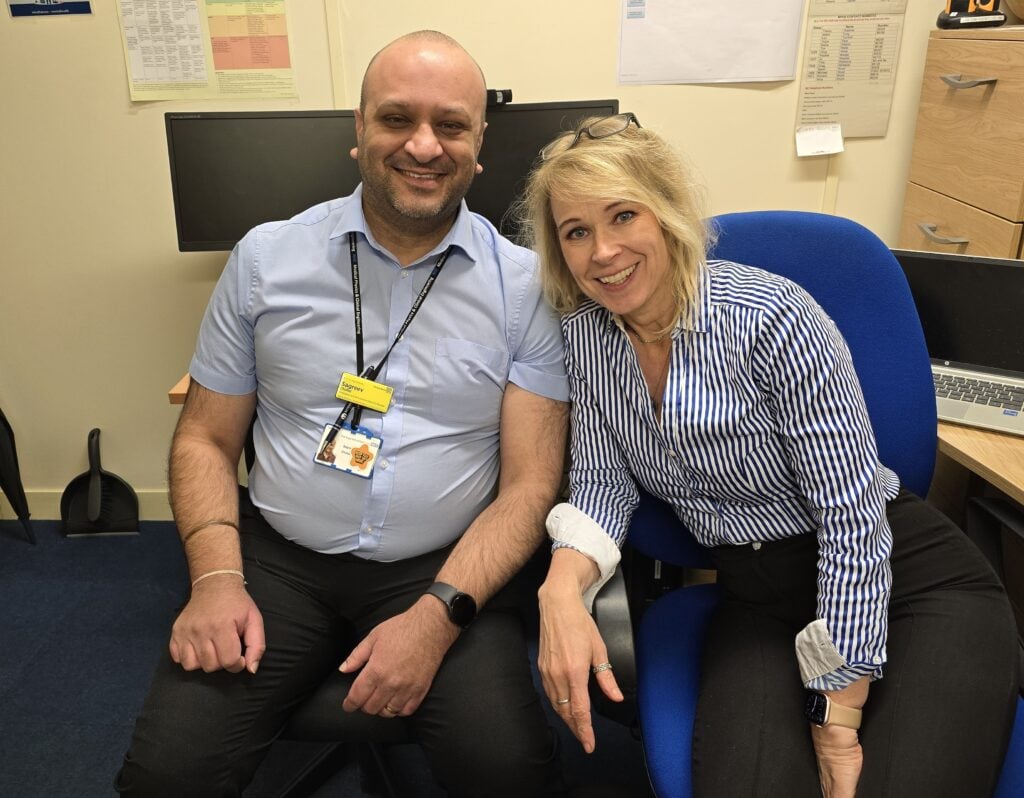
Sagreev Chahal, operational technical manager for clinical engineering at the Trust, said: “We believe T-Levels are an excellent talent pipeline for students who want to either apply for our apprenticeship programme or for any of the other substantive roles in the department.
“It also provides a great opportunity for students to get exposure to the industry and learn some professional skills in a real-world environment that they may not necessarily get in academia.”
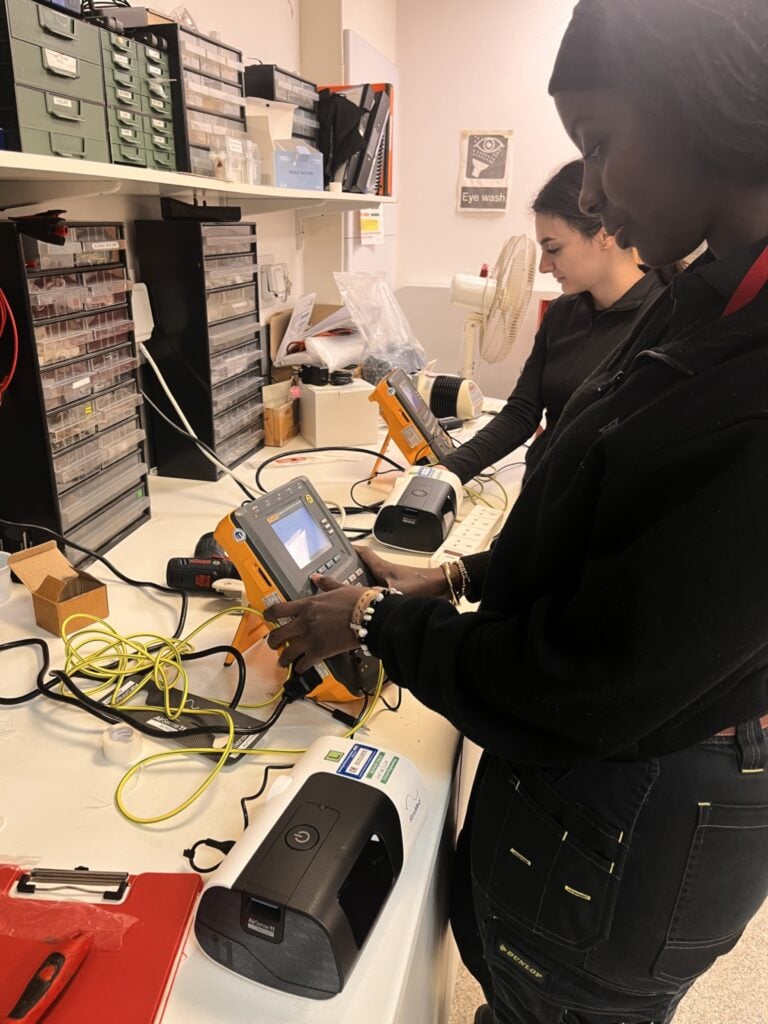
Edelquin said: “Working in the hospital has been highly informative. We’ve learnt about processes that streamline the maintenance of medical equipment, and how to interpret the data it highlights.
“We have had training on processes such as soldering and multi meters – knowledge which can be transferred to all sectors.
“The T-Level is a good qualification in engineering that provides the skills needed to flourish in whatever sector you aspire to join. It requires patience and an attention to detail.”
Rebeca added: “I knew I wanted to do engineering but couldn’t decide between a BTEC level three course or a T-Level. I concluded that the T-Level course would be more beneficial due to the practical lessons and the 315 required industry placement hours.
“This placement has given me an understanding of the NHS engineers’ responsibilities, professional conduct, and the importance of clinical engineering which I have enjoyed enormously.”
The Trust’s partnership with Telford College dates back to early last year, when Sagreev was involved in a careers fair at the Wellington campus.
“This shows our commitment in training the next generation of engineers, whether they stay in clinical engineering or move to some other engineering role,” he said.
“We have a shortage of clinical technologists in the UK, so we hope that by hosting T-Level students it will highlight our industry and show that we are an alternative to suitable organisations typically associated with engineering or manufacturing.”
He added: “Edelquinn and Rebeca have been enthusiastic, inquisitive, and eager to solve engineering problems. Their confidence has grown, and staff say they’ve been a real asset to the department.
“It’s been great to see them grow in confidence and help assist the department with the day-to-day tasks.”